
Arc spraying process
The arc spraying process uses direct current to melt two wires that are fed together in a spray gun and melted at their tips by an electric arc. The molten droplets are then accelerated by an atomising gas to velocities of up to 150 m/s and propelled onto the pre-roughened surface. There they solidify, mechanically interlock with the substrate and form a dense, lamellar protective coating. These layers are characterised by high adhesion strength and excellent durability.
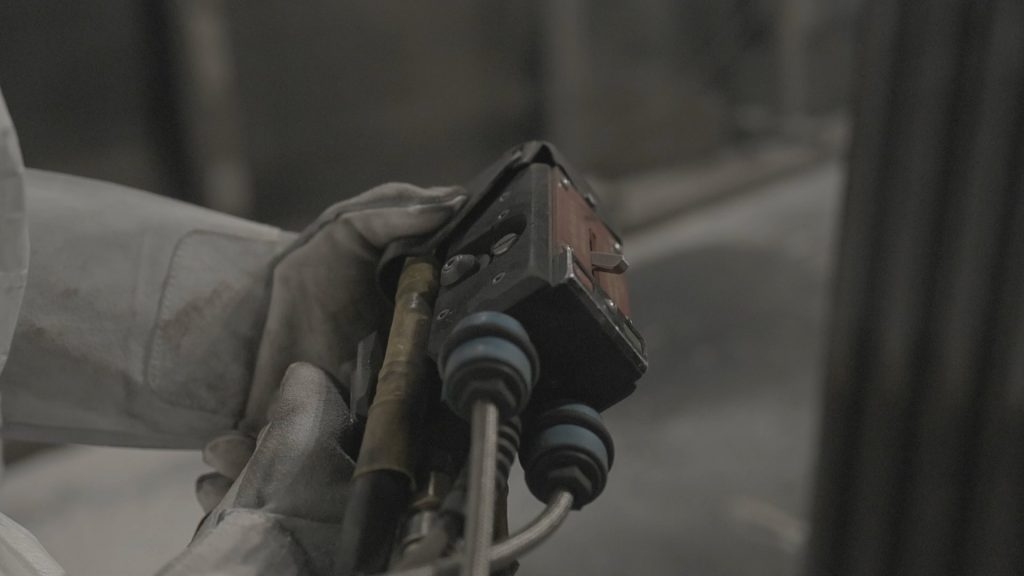
Wide range of materials and alloys through cored wires
By using innovative cored wires, which encapsulate coating materials within stainless-steel or nickel–chromium sheaths, it is possible to process materials and alloys that could not be produced in solid-wire form. This opens up a broad application spectrum for both corrosion protection and wear protection.
Processing of nickel-based and highly wear-resistant materials
Häuser & Co GmbH uses the arc spraying process for nickel-based materials and extremely wear-resistant alloys, such as iron–chromium systems with a hardness of 950–1050 HV and temperature resistance up to 900 °C.
Beschichtungen selbst unter erschwerten Bedingungen
Ein weiterer Vorteil des Verfahrens ist die robuste und kompakte Gerätetechnik, die auch mobile Anwendungen ermöglicht. So können Beschichtungen selbst unter erschwerten Bedingungen, etwa in Kesseln, durchgeführt werden, um die Lebensdauer korrodierter Wandflächen deutlich zu verlängern.
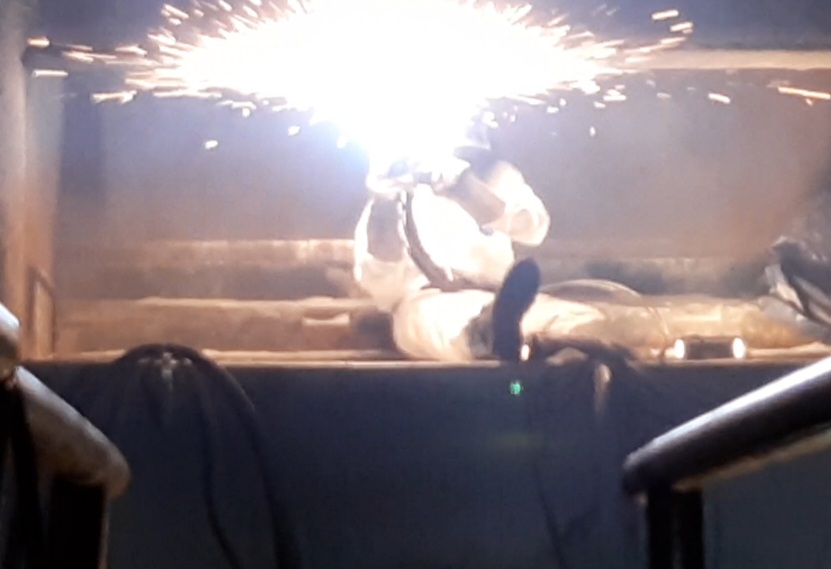
Robust wear- and corrosion-protection coatings
Häuser & Co GmbH primarily applies the arc spraying process to produce very hard wear-protection layers and zinc–aluminium coatings for atmospheric corrosion protection. Due to its higher porosity compared with plasma spraying and the more limited range of applicable materials, arc spraying is only conditionally suitable for coatings designed to resist chlorine- and sulphur-induced high-temperature corrosion in boiler plant.
High output for large-area applications
Because of its very high melting capacity relative to all other thermal spraying processes and the comparatively compact system size, arc spraying is particularly suitable for large-area applications and mobile work.
Typical fields of application
Typical applications include thermal zinc spraying for wind turbines and steel structures, bridge construction and marine engineering.
Repair measures
Rapid-response repair work that brings a power plant back online quickly and gives the operator time for a thorough root-cause analysis and for planning longer-term countermeasures.