
Alloy Systems for High-Temperature Applications
Where process conditions or boiler design do not allow high-temperature corrosion and/or abrasion to be prevented for a given fuel, protecting evaporator and superheater heating surfaces with suitable alloy systems is often the only way to significantly extend the service life of individual boiler components. Alongside the chosen application technique, the alloy itself is a critical factor for long-term success.
Because the loading profiles depend on many parameters and can vary widely, there is no universal solution for all components and boiler types. Different alloys and system solutions are required, depending on the specific stresses involved, to ensure reliable, long-term protection.
For this reason, Häuser & Co GmbH has been developing and optimising alloy systems since 1995, tailoring them to the specific combination of temperature, corrosion and abrasion in each plant.
Waste Incineration
(Waste-to-Energy Plants)
In waste incineration, the dominant damage mechanism is often chlorine-induced corrosion. Here, nickel-based alloys containing different refractory metals have proven highly effective.
On evaporator heating surfaces, alloys with chromium and molybdenum additions are widely used. In the superheater area, tungsten (and tungsten carbide) has proven to be a particularly suitable alloying element, offering high resistance to both corrosion and erosion under demanding high-temperature conditions.
Biomass Combustion
In biomass-fired plants – especially those firing wood and cellulose – higher dust and ash loads in the flue-gas stream, often significantly higher temperature and steam parameters (compared with waste incineration), and the combustion systems employed (stationary and circulating fluidised beds) typically lead to increased abrasion rates.
In these applications, nickel-based alloys with tungsten carbide additions have also distinguished themselves. Thanks to their very high hot hardness combined with the required corrosion resistance, they outperform alloy systems such as the well-known INCONEL™ or HASTELLOY™ grades in many demanding biomass service conditions.
Coal-Fired Power Plants, Chemical and Metals Industries
In coal-fired power plants, as well as in the chemical industry and metals/steelworks sector, iron- and cobalt-based alloys and ceramic materials are also widely utilised. Here, the focus is often on protecting components against mechanical wear (erosion and abrasion) at temperatures of up to approximately 1,000 °C.
Coating Materials and Further Information
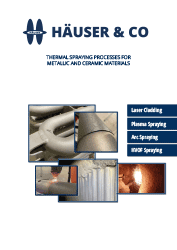
An overview table of the coating materials we use is provided in our brochure. All data sheets and brochures are available for download from the downloads section of our website.
Beschichtungen in Abhängigkeit von Temperatur sowie chemischen und mechanischen Problemen
In unsererm Beschichtungs-RADAR finden Sie einen schnellen Überblick über von uns häufig eingesetzte Beschichtungswerkstoffe, in Abhängigkeit von Wirkungsweisen, Beschichtungsverfahren sowie typischen Einsatzbereichen.
Bitte kontaktieren Sie uns für einen Beratungstermin um diese grobe Analyse zu verirfizieren.
Eine Tabelle mit den von uns eingesetzten Beschichtungswerkstoffen finden Sie auch in unserer Broschüre.
